Tank or tankless in a Fremont house
Gas line size, venting, hard water and the garage wall: what actually decides it.
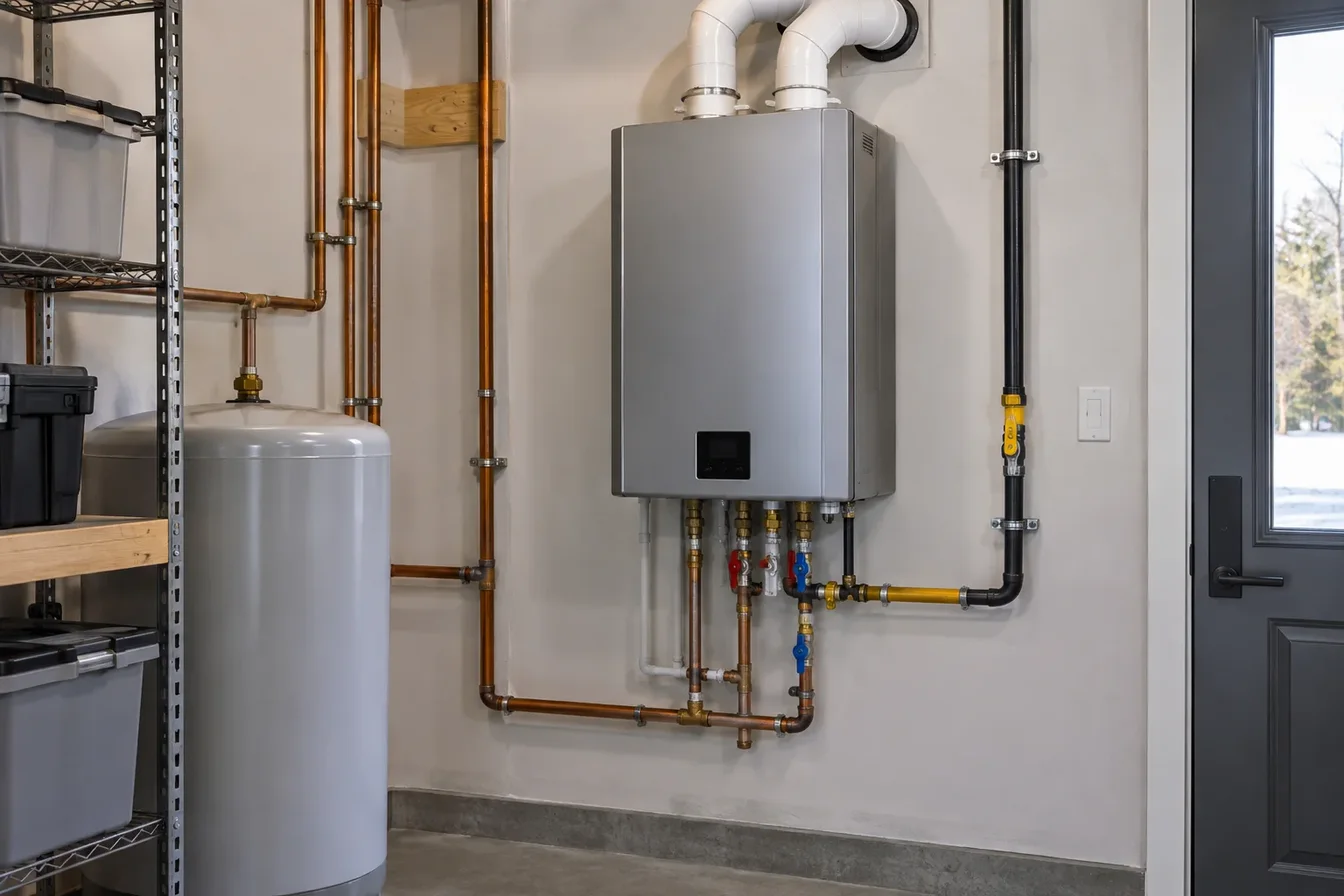
Everyone asks. The honest answer depends on four things in your house, not on which is “better”.
Gas line size
A tankless heater burns four to five times the gas of a tank, briefly, while you shower. Many 1960s Fremont houses have a ½ in line to the heater; tankless usually needs ¾ in from the meter. If the line has to be upsized, that is a half day on its own and the thing most quotes forget.
Venting
A tank vents up a metal flue through the roof. A tankless condensing unit vents in PVC through a wall, which is easy in a garage and hard in an interior closet. Where your heater lives decides more than the brochure does.
Hard water
ACWD water runs around 8 to 12 grains per gallon in most of Fremont. Scale builds in a tankless heat exchanger and needs an annual vinegar flush through isolation valves. Tanks collect sediment instead and want a yearly drain. Either way, a filter or softener pays for itself in heater life.
What you actually get
| Question | Tank | Tankless |
|---|---|---|
| Hot water runs out? | Yes, after 40–50 gallons | No, at the rated flow |
| Two showers at once | Fine until the tank empties | Depends on the unit size and incoming temperature |
| Install time | Half a day | Full day, more with a gas upsize |
| Space | A 2 ft circle on the floor | A suitcase on the wall |
| Typical life, Fremont water | 8–12 years with a yearly drain | 15–20 years with a yearly flush |
| Permit | Yes | Yes, plus gas |
Our rule of thumb
If the heater is in the garage on an exterior wall and the gas line is already ¾ in, tankless is a sensible upgrade. If it is in a closet with a ½ in line, a good tank with an expansion tank and a yearly drain is the sane choice. We price both after we have looked, and we tell you which one we would put in our own house.