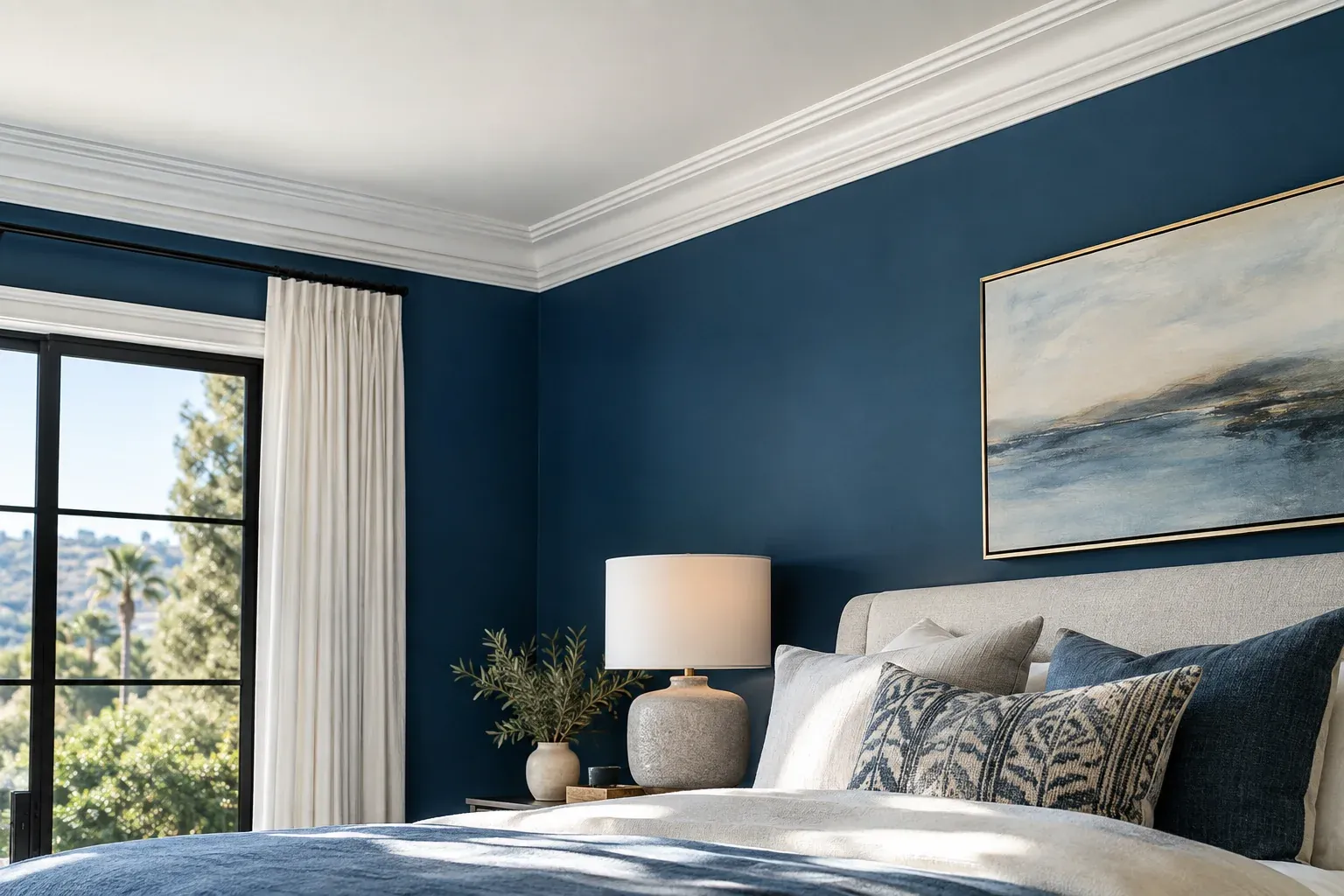
Sheen is the thing most people forget to decide, and the thing that most changes how a color looks on the wall. Same color, two sheens, two different rooms. Here is how we specify it.
What sheen actually does
Sheen is how much light the dried paint reflects. Flat reflects almost none, which hides every bump in an old plaster wall. Semi-gloss reflects a lot, which makes trim pop and makes a wall look like a gym corridor. In between, the modern washable mattes have changed the old rule that “flat means you can’t clean it”.
Room by room
| Surface | Our default | Why |
|---|---|---|
| Bedrooms, living rooms | Matte | Hides plaster imperfections, softest color, modern mattes wipe clean |
| Halls, stairs, kids’ rooms | Eggshell | Scuffs wipe off; a hint of light without highlighting bumps |
| Kitchens, bathrooms | Eggshell or satin | Moisture and grease; satin only on perfectly smooth walls |
| Trim, doors, cabinets | Satin | Durable, cleanable, and it does not show roller or brush texture the way semi-gloss does |
| Ceilings | Flat | Ceilings are never perfect. Flat forgives them |
| Exterior body | Satin | Sheds water and dirt better than flat; still forgiving on siding |
Dark colors and sheen
Dark colors show everything: roller marks, touch-ups, the lap where one wall meets the next. The darker the color, the flatter we go. Harbor Navy in a bedroom is matte or, at most, eggshell. The same navy on a door is satin and sprayed, because a brushed dark satin door shows every stroke.
The sheen in the visualiser
The home-page visualiser shows each color in the sheen we would normally specify for it. If you want the same color shinier or flatter, say so at the consult and we bring a drawdown in both.